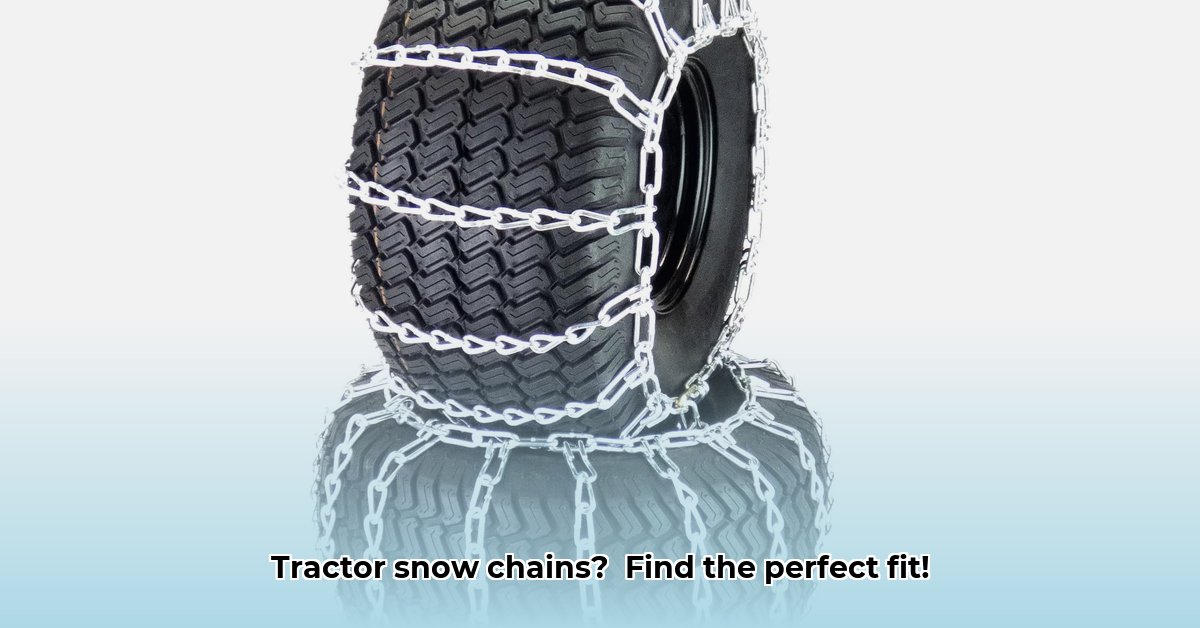
Getting your tractor through winter's worst safely and efficiently requires the right snow chains. This guide helps you choose, install, and maintain them, ensuring peak performance all season long. We'll cover various chain types, selection criteria, installation techniques, and troubleshooting tips, making you a snow chain expert in no time. For more information on tractor tires, check out this helpful resource: Tractor Tire Guide.
Choosing the Right Snow Chains: A Personalized Approach
Before selecting snow chains, consider your specific needs. What type of terrain do you typically encounter? Deep snow, icy patches, or a mix? Do you need chains for occasional use or heavy-duty plowing? Your tractor's size and tire dimensions are also crucial for proper fit and safety. Incorrect sizing can lead to poor traction or even tire damage. A smaller tractor might manage with simpler chains, while a larger machine plowing heavy snow needs robust, heavy-duty options.
Types of Tractor Snow Chains: A Detailed Comparison
Several chain types offer varying levels of traction, durability, and ease of installation. Let's explore the most common options:
Ladder Chains
These are the most basic and affordable chains. They're ideal for light to moderate snow conditions. They're relatively easy to install, making them a good choice for occasional use.
- Pros: Inexpensive, easy installation, suitable for light snow.
- Cons: Limited traction in heavy snow or ice.
Diamond Chains
Diamond chains offer superior traction compared to ladder chains, especially on icy surfaces. Their criss-cross design provides more biting power. Installation is slightly more complex.
- Pros: Excellent traction on ice and packed snow. More durable.
- Cons: More difficult installation. Higher cost than ladder chains.
V-Bar Chains
V-bar chains provide exceptional traction in deep snow and mud. Their aggressive design bites into the terrain, offering maximum grip. However, installation is more challenging, and they are typically the most expensive option.
- Pros: Superior grip in deep snow and mud. Highly durable.
- Cons: Difficult installation. Highest cost.
Square Link Chains
These heavy-duty chains are designed for extreme conditions, providing superior strength and durability. They are best for large tractors working in demanding environments.
- Pros: Exceptional strength and durability for extreme conditions.
- Cons: Most complex installation. Highest cost.
Here's a comparison table summarizing the key features:
| Chain Type | Traction | Durability | Installation Ease | Price Range | Best Suited For |
|---|---|---|---|---|---|
| Ladder | Moderate | Moderate | Easy | Budget-Friendly | Light to moderate snow |
| Diamond | High | High | Moderate | Mid-Range | Icy surfaces, heavy snow |
| V-Bar | Very High | Very High | More Difficult | Higher-End | Deep snow, extreme conditions |
| Square Link | Very High | Very High | More Difficult | Premium | Extreme conditions, heavy-duty tractors |
Choosing the Right Chains: A Step-by-Step Guide
Selecting the right chains involves several key steps:
- Measure Your Tires: Accurately measure your tire's width and diameter. Consult your tractor's manual or the tire sidewall.
- Consult Sizing Charts: Use the manufacturer's sizing chart to find the correct chain size. Ensure a precise fit for optimal performance and safety.
- Consider Your Terrain: Choose a chain type suitable for your typical winter conditions (light snow, heavy snow, ice).
- Assess Duty Cycle: How often will you use the chains? Heavy use might justify a more durable (and pricier) option that better withstands wear and tear.
Installing Your Tractor Snow Chains: A Detailed Guide
Proper installation is crucial for both safety and performance:
- Preparation: Park your tractor on a level surface and engage the parking brake.
- Chain Verification: Double-check the chains match your tire size. An improper fit can ruin your tires or the chains themselves.
- Chain Positioning: Carefully place the chains around the tire, aligning them correctly. Refer to the manufacturer's instructions.
- Securing the Chains: Use the chain's connecting mechanisms to secure them firmly. Again, consult manufacturer's instructions.
- Tension Adjustment: Tighten the chains evenly, ensuring a snug but not overly tight fit. Overly tight chains can damage your tires.
- Test Drive: Start slowly to allow the chains to settle and check for any issues.
Maintaining and Storing Your Chains
Proper care extends the lifespan of your snow chains:
- Cleaning: After each use, thoroughly clean the chains to remove mud, ice, and salt.
- Storage: Store them in a dry place, preferably in a protective bag to prevent rust.
- Inspection: Regularly inspect the chains for wear and tear. Replace damaged chains immediately to prevent unexpected failures.
Troubleshooting Common Problems
- Chains Slipping: Check tension and ensure the chains are correctly engaged with the tire.
- Chain Breakage: This may indicate poor-quality chains or incorrect installation. Check for wear and replace as needed.
- Tire Damage: This often results from improper tension or incorrect chain size. Always double-check measurements and avoid excessive tightening.
Conclusion
Choosing and using the right tractor snow chains significantly improves winter safety and efficiency. By carefully considering your terrain, tractor type, and intended use, you can select chains that provide optimal traction and durability. Remember to follow the installation and maintenance tips provided here to maximize your chains' lifespan and avoid potential issues. Be prepared for winter – the right chains make all the difference!